
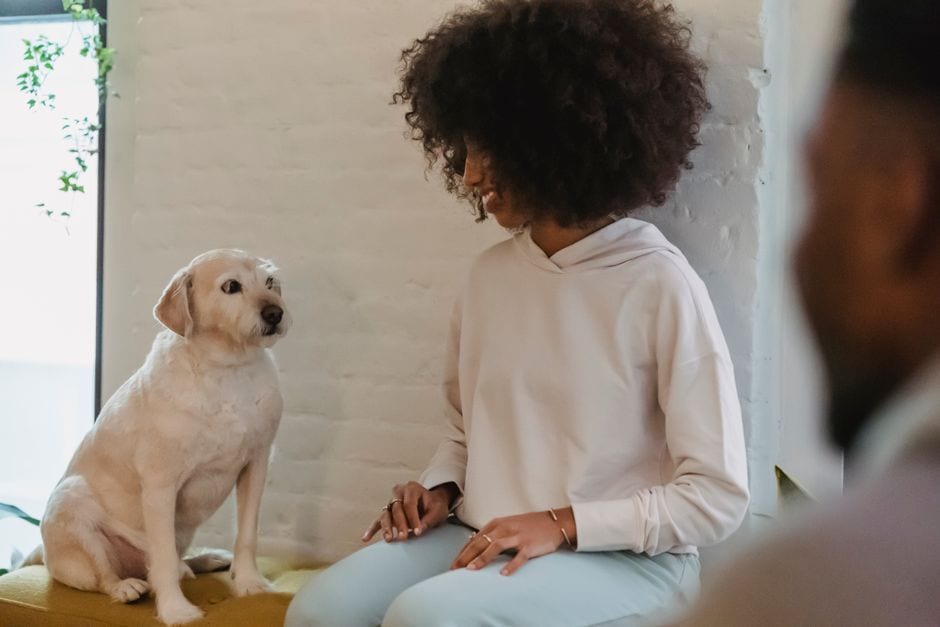
You walk into the kitchen and hear paws behind you; a moment later, your dog is waiting outside the bathroom door.
Following can be normal companionship
For many households, having a furry shadow is simply part of everyday life.
Dogs are social animals, and staying close to familiar people can be comforting, rewarding, and interesting.
Your dog may have learned that following you leads to something pleasant, such as a walk, a meal, a toy, or a moment of attention.
Even an ordinary trip to the kitchen can become exciting when it sometimes ends with a treat.
Some dogs also enjoy watching household activity and prefer to stay near the center of it.
Breed tendencies, individual personality, age, and past experiences can all shape how closely a dog follows family members.
An especially attentive dog is not necessarily anxious or poorly trained.
Context is the key.
If your dog follows you calmly, settles nearby, and can relax when you leave the room, the behavior may be nothing more than companionship.
Know when following signals distress
Look for a loose body, comfortable resting posture, and the ability to engage with toys or other activities independently.
On the other hand, following that is paired with persistent distress when separated deserves closer attention.
Some dogs bark, pace, drool, scratch at doors, or become destructive when left alone.
Others may show subtler signs that are easy to miss without careful observation.
These behaviors can have several causes, so do not diagnose separation anxiety from following alone. |
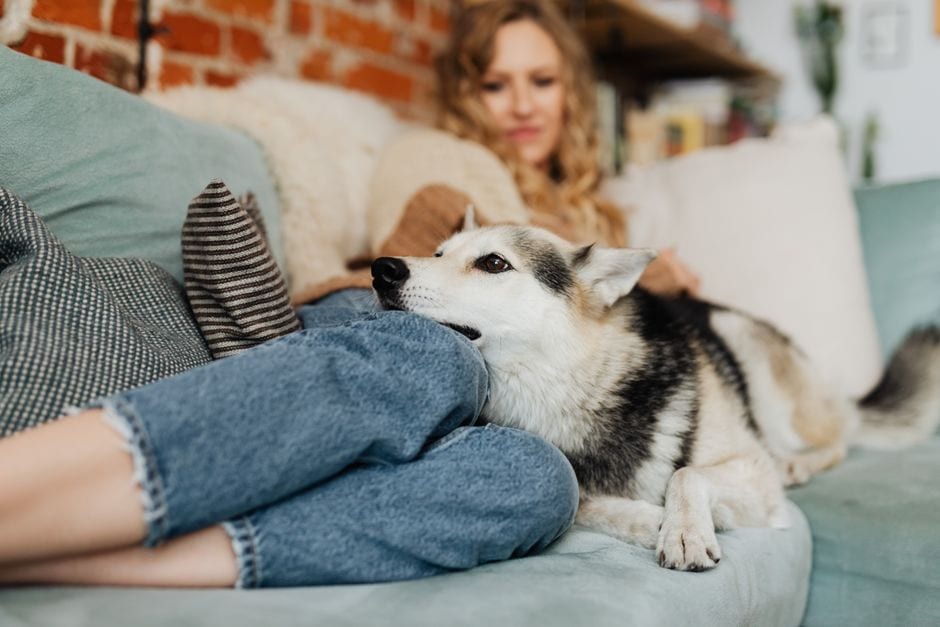 Photo by https://kaboompics.com/ on Pexels |
If the change is sudden or accompanied by other symptoms, start with a veterinary check to rule out pain or illness.
An older dog that begins shadowing people more closely may be responding to changes in hearing, vision, comfort, or cognitive function.
Your veterinarian can help determine whether medical evaluation or behavioral support is appropriate.
For dogs that are simply enthusiastic companions, encourage a healthy balance of closeness and independence.
Offer a comfortable resting place where the dog can see family activity without needing to stand up every time someone moves.
Encourage confidence and independence
Reward moments when the dog chooses to settle quietly on a mat or bed.
Provide age-appropriate enrichment such as supervised puzzle toys, sniffing games, and short training sessions.
Practice very brief, low-pressure periods apart only when the dog is comfortable, and avoid forcing separation that triggers panic.
If distress is significant, a qualified behavior professional can help create a gradual plan tailored to the dog.
Punishment is not a useful response to fear or attachment-related distress.
Remember that affection and independence are not opposites.
A dog can enjoy being close to you while also learning that resting alone is safe.
Some dogs will always prefer to accompany you from room to room, and that preference is not automatically a problem.
The goal is not to stop your dog from loving your company.
It is to understand what the behavior means and support a life in which your dog feels secure both beside you and, when necessary, apart. |
0 Comments
Join the conversation
Be the first to comment
Share your thoughts above.