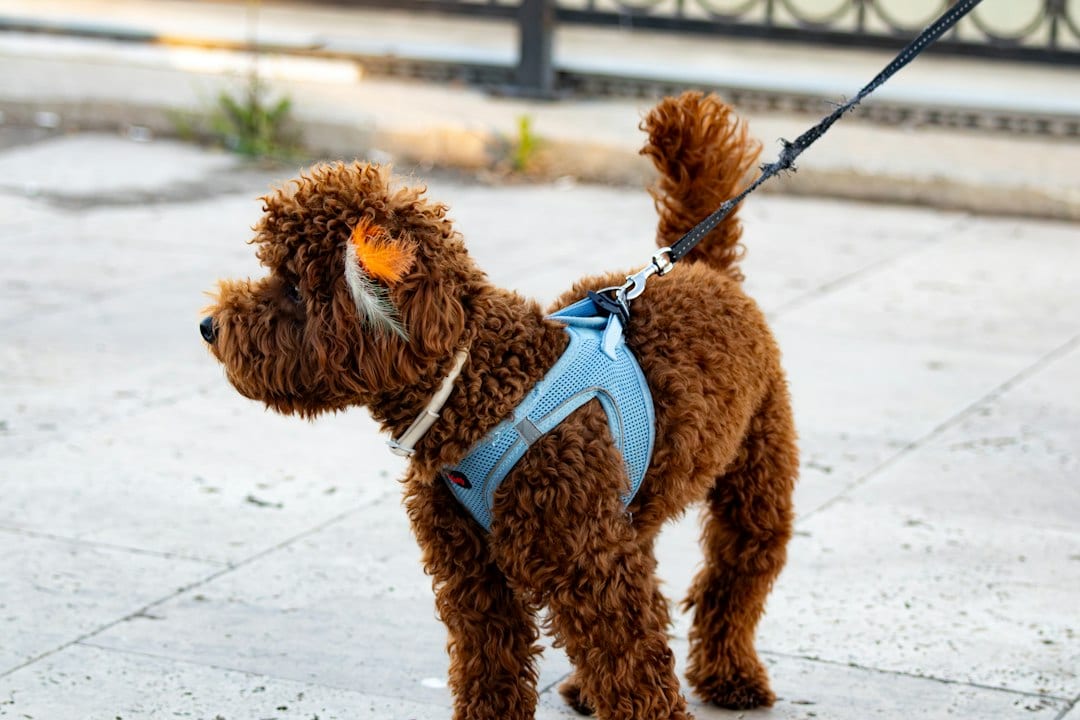
A dog harness can make walks more comfortable, but only if it fits your dog and you use it correctly.
Start with fit, not appearance
With so many designs on the market, it is tempting to choose the one with the brightest colors or the most impressive claims.
A better approach begins with your dog's body shape, walking style, and comfort.
Measure the chest where the manufacturer recommends and compare the result with that specific brand's sizing chart.
Do not assume that a medium in one product will fit the same way as a medium in another.
An adjustable harness is useful because it lets you fine-tune the fit around the chest and shoulders.
The harness should sit securely without pinching, rubbing behind the front legs, or restricting natural movement.
Check whether you can comfortably fit fingers under the straps while still preventing the dog from backing out.
Because body shapes vary, no single finger-rule or size label can replace a careful fit check.
Choose hardware for your dog's needs
Front-clip harnesses may help some owners redirect pulling, while back-clip designs are often straightforward for relaxed walking.
Neither design automatically teaches loose-leash manners, so pair the equipment with patient training.
Look closely at the strap placement and whether it interferes with shoulder movement.
For dogs with sensitive skin or short coats, smooth edges and thoughtful padding may help reduce friction.
Padding alone doesn't prove comfort if the harness is too tight or shifts with every step. |
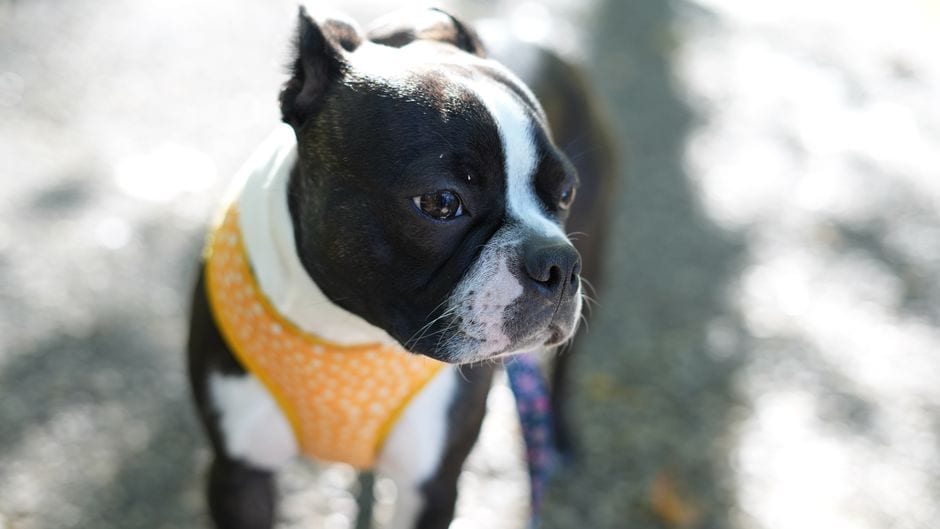 Photo by Sean Brannon on Pexels |
Hardware quality matters, especially for strong or energetic dogs.
Inspect buckles, stitching, attachment points, and leash clips for wear before walks.
Reflective details can improve visibility in low light, but they don't replace watching traffic and using suitable lighting.
If your dog has a history of escaping equipment, ask a knowledgeable trainer or veterinarian about a secure design and additional safety precautions.
Test the harness before a long walk
Try the harness indoors for a few minutes before using it on a busy sidewalk.
Offer treats and praise while your dog explores the new feeling, and remove it if the dog appears distressed.
Once outside, watch how the harness moves when your dog turns, sniffs, sits, and trots.
Red marks, hair loss, or repeated scratching after a walk may mean the fit or style needs attention.
Some dogs have medical or mobility issues that require a special design, so consult your veterinarian when ordinary harnesses cause discomfort.
Before buying, read the return policy and make sure you can exchange a size that does not fit.
Customer photos of dogs with similar body shapes can be more useful than a product description alone.
No single harness is best for every dog.
The best choice stays secure, allows comfortable movement, and supports your dog's training needs.
Once you find a good fit, check it regularly as puppies grow or adult dogs change weight. |
0 Comments
Join the conversation
Be the first to comment
Share your thoughts above.